What Japanese People Eat in a Typical Day: A Gentle Look at Everyday Meals in Japan
A typical Japanese day of eating is often less about abundance and more about balance. Rather than relying on one large, heavy meal, many everyday Japanese meals are built around small, varied dishes that work together: rice, soup, fish or protein, vegetables, fermented foods, and tea. In this article, we explore what Japanese people commonly eat in a typical day and what these habits can teach us about calm, nourishing eating.
When people think about Japanese food, they often imagine sushi, ramen, or restaurant-style meals.
But everyday eating in Japan is usually much simpler. It is often home-based, seasonal, and structured around modest portions. Meals tend to emphasize variety, freshness, and a sense of rhythm rather than excess.
This does not mean every person in Japan eats the same way.
Modern Japanese eating habits are diverse, and convenience foods, bread, coffee, pasta, and Western-style meals are also part of daily life. Still, many typical meals continue to reflect a familiar pattern: staple grains, soup, small side dishes, and foods that feel light but satisfying.
What makes this style of eating so interesting is not perfection. It is the quiet consistency of meals that are nourishing, practical, and integrated into daily life.
In this article
- What a typical day of eating in Japan looks like
- Common breakfast, lunch, and dinner patterns
- Why Japanese meals often feel balanced
- What this way of eating may teach us about longevity
- What a Typical Japanese Day of Eating Looks Like
- Breakfast in Japan: Light, Warm, and Steady
- Lunch in Japan: Practical, Varied, and Often Portable
- Dinner in Japan: The Most Complete Meal of the Day
- Snacks, Drinks, and Everyday Simplicity
- Why Japanese Meals Often Feel Balanced
- What This May Teach Us About Longevity
- A Family-Rooted Way of Eating
- How to Bring a Little of This Into Your Own Life
- Final Thoughts
What a Typical Japanese Day of Eating Looks Like
A traditional Japanese meal pattern often begins with a simple idea: one staple, one soup, and a few supporting dishes.
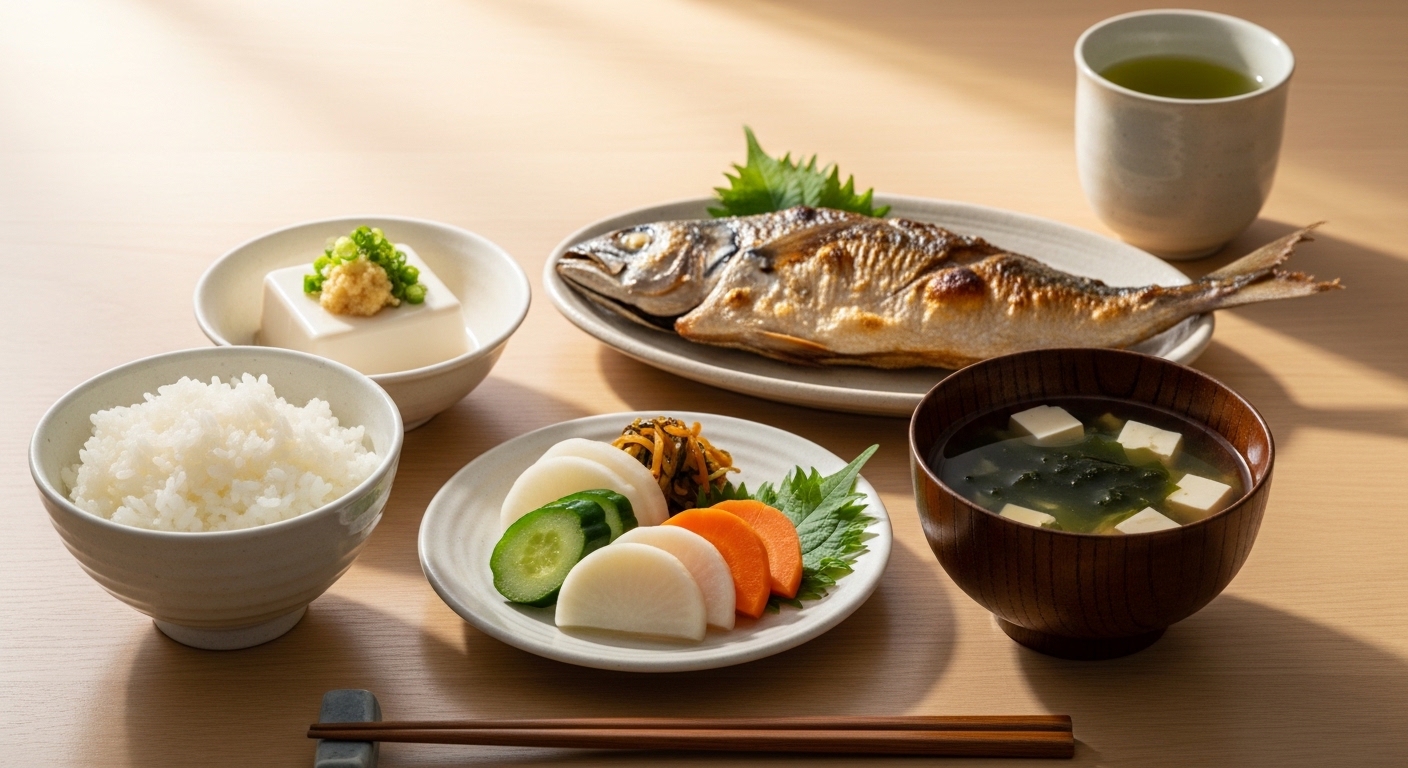
In many homes, this means rice, miso soup, a protein such as fish or tofu, vegetables, and fermented foods like pickles or natto. Meals are often modest in portion, but varied in texture, color, and flavor.
This structure creates a different eating experience from meals built around one large main dish.
Instead of eating a single heavy plate, people move between small dishes. A few bites of rice, then soup, then fish, then vegetables. This rhythm naturally slows the pace of eating and can make meals feel more complete.
Not every meal follows this pattern perfectly, of course. Many people eat toast for breakfast, noodles for lunch, or convenience store meals during a busy workday. But the idea of balance through several smaller components remains an important part of how Japanese food is often understood.
A typical Japanese meal, in simple terms:
It often combines a staple food like rice with soup, protein, vegetables, and small side dishes, creating variety without heaviness.
Breakfast in Japan: Light, Warm, and Steady
Breakfast in Japan can vary widely from person to person, but a traditional style breakfast is usually simple and grounding.
A common breakfast may include steamed rice, miso soup, grilled fish, pickles, nori seaweed, tamagoyaki (rolled omelet), or natto. Green tea is also a familiar part of the morning in many households.
This kind of meal may look modest, but it offers a surprising sense of steadiness.
It is warm rather than sugary, savory rather than overly rich, and structured around foods that feel calm on the body. Instead of a breakfast designed for stimulation, it often feels like a quiet beginning to the day.
At the same time, many modern breakfasts in Japan are more Western in style. Toast, yogurt, fruit, coffee, and eggs are all common. Even then, portions often remain relatively moderate compared with heavier breakfast habits elsewhere.
Common breakfast foods in Japan
Some of the foods often found at breakfast include:
- Steamed white rice
- Miso soup
- Grilled fish such as salmon
- Natto
- Nori seaweed
- Pickled vegetables
- Tamagoyaki
- Green tea
Lunch in Japan: Practical, Varied, and Often Portable
Lunch in Japan is often shaped by work, school, and convenience.
For many people, lunch is not elaborate. It may be a homemade bento, a simple noodle meal, a rice bowl, or something purchased from a convenience store, supermarket, or small restaurant.
Bento is one of the most recognizable lunch styles.
A typical bento may include rice, a protein such as fish or chicken, vegetables, and one or two small side dishes. The portions are usually compact, but the variety can make the meal feel satisfying.
Other common lunches include soba or udon noodles, onigiri rice balls, curry rice, donburi bowls, sandwiches, or leftovers from dinner. What matters here is not always ideal nutrition, but the continued presence of structure: meals are often portioned, composed, and practical.
Even quick lunches in Japan often retain a sense of order that keeps them from feeling chaotic.
Common lunch patterns in Japan
A typical lunch might be one of the following:
- Bento with rice, protein, and side dishes
- Onigiri with soup or tea
- Soba or udon noodles
- Donburi such as oyakodon or gyudon
- Curry rice
- A light set meal at a small restaurant
Dinner in Japan: The Most Complete Meal of the Day
In many households, dinner is the most balanced and substantial meal of the day.
This is often the meal where the familiar Japanese pattern becomes most visible: rice, soup, fish or another protein, vegetables, tofu, and small side dishes. The dishes may be simple, but together they create a meal that feels complete without being overwhelmingly heavy.
Fish is common, especially grilled or simmered fish, but dinner may also include tofu, chicken, pork, eggs, or hot pot dishes depending on the household and season.
Vegetables are often prepared in several forms: lightly cooked greens, simmered root vegetables, salads, pickles, or seaweed dishes. Soup, especially miso soup, adds warmth and rhythm to the meal.
This style of eating encourages variety almost naturally.
Instead of relying on one dominant food, the meal is made from several modest parts. That can support a broader range of nutrients while also making dinner feel calmer and more intentional.
A typical Japanese dinner might include
- A bowl of rice
- Miso soup
- Grilled or simmered fish
- Tofu or another light protein
- Vegetable side dishes
- Pickles or another fermented food
- Tea
Snacks, Drinks, and Everyday Simplicity
Japanese people do snack, of course, but snacks are often relatively modest in size.
Common choices may include fruit, rice crackers, sweet potatoes, yogurt, small pastries, or traditional sweets eaten with tea. Snacks can also be seasonal and portioned in a way that feels lighter than constant grazing.
Tea plays an important role in everyday life.
Green tea is especially common, but barley tea, roasted tea, and other unsweetened teas are also widely enjoyed. These drinks contribute to a meal culture that is often less centered on sugary beverages.
Water, tea, and soup all support a style of eating that can feel more settled and less overstimulating.
This does not mean Japanese diets are free from processed food or modern habits. Japan also has convenience snacks, desserts, instant noodles, and fast food. But in many ordinary homes, these foods exist alongside a strong culture of simple, composed meals.
Why Japanese Meals Often Feel Balanced
Part of what makes Japanese eating feel balanced is not one special ingredient. It is the combination of several small habits.
Meals often include multiple food groups in modest amounts. Vegetables appear regularly. Fermented foods are common. Soup adds warmth and satiety. Portions are often moderate. Meals are plated in separate dishes, which can encourage slower eating and a clearer sense of what is being consumed.
There is also an aesthetic dimension.
Japanese food culture often values visual balance, seasonality, and care in presentation. Even simple meals can feel meaningful because they are arranged thoughtfully. That sense of order may shape not only how food looks, but how it is experienced.
When meals are composed with this kind of care, eating can become less automatic and more attentive.
Why this way of eating feels nourishing
Japanese meals are often built on variety, moderate portions, warm dishes, vegetables, and simple repetition. The result is a style of eating that can feel steady, satisfying, and sustainable.
What This May Teach Us About Longevity
Japanese longevity is shaped by many factors, not food alone.
Community, movement, sleep, home life, stress, access to care, and cultural habits all matter. Still, everyday eating patterns are one important part of the picture.
A typical Japanese day of eating often reflects qualities that support long-term well-being:
Moderation rather than excess.
Variety rather than monotony.
Warm, home-style meals rather than constant ultra-processed convenience food.
Routine rather than chaotic eating.
These qualities may be just as important as individual superfoods.
In that sense, the Japanese approach to food is not only about what is eaten. It is also about how meals are structured, how regularly they are prepared, and how naturally they fit into everyday life.
A Family-Rooted Way of Eating
One reason Japanese food culture can feel so grounded is that it is often shaped by home life.
Meals are not only nutritional events. They are part of family rhythm, memory, and daily care. Rice being prepared in the kitchen, soup served warm, side dishes shared across the table, tea poured after a meal — these small patterns create continuity.
This family-rooted quality matters.
When eating is woven into home life, it becomes easier for nourishment to feel ordinary rather than performative. Food is not always about optimization. It is also about stability, comfort, and repetition across generations.
That may be one reason this style of eating can feel sustainable over time.
A home-centered view of food
In many Japanese households, eating is not just about calories or trends. It is part of family rhythm, domestic care, and the quiet structure of everyday life.
How to Bring a Little of This Into Your Own Life
You do not need to copy Japanese meals exactly to learn from them.
A gentler approach is to notice the principles behind them. You might begin by adding one bowl of soup to a meal. You might serve vegetables in a separate dish. You might create a simpler breakfast with rice, eggs, and tea. You might reduce the pressure to make one perfect large plate and instead build a meal from a few smaller parts.
The lesson is not strict imitation.
It is the value of rhythm, moderation, and variety.
Even one calmer, more balanced meal each day can begin to change how eating feels.
Final Thoughts
What Japanese people eat in a typical day is not one fixed menu.
But many everyday meals in Japan share a recognizable quality: they are simple, varied, moderate, and quietly nourishing.
Rice, soup, fish, vegetables, tofu, fermented foods, tea.
None of these foods is extraordinary on its own. But together, and repeated over time, they create a way of eating that feels steady rather than extreme.
That may be one of the most meaningful lessons in the Japanese diet.
Not a perfect food system.
Not a trend.
But a daily rhythm of nourishment that supports ordinary life.
Related reading on The Zen Longevity


コメント