Why the Japanese Approach to Longevity Is About Rhythm, Not Perfection
Healthy longevity is often presented as a matter of optimization. But in everyday life, long-term well-being may depend less on perfection and more on rhythm — the small, repeatable habits that make life feel steady, nourishing, and sustainable.
Modern wellness culture often speaks the language of control.
Eat perfectly. Sleep perfectly. Move perfectly. Optimize every variable. Eliminate every weakness. Track every detail.
While this approach can be useful in some contexts, it can also make health feel fragile, demanding, and strangely disconnected from ordinary life.
Longevity, however, is not built in a single ideal week.
It is built over time — through what we return to, what we repeat, and what our lives can realistically hold.
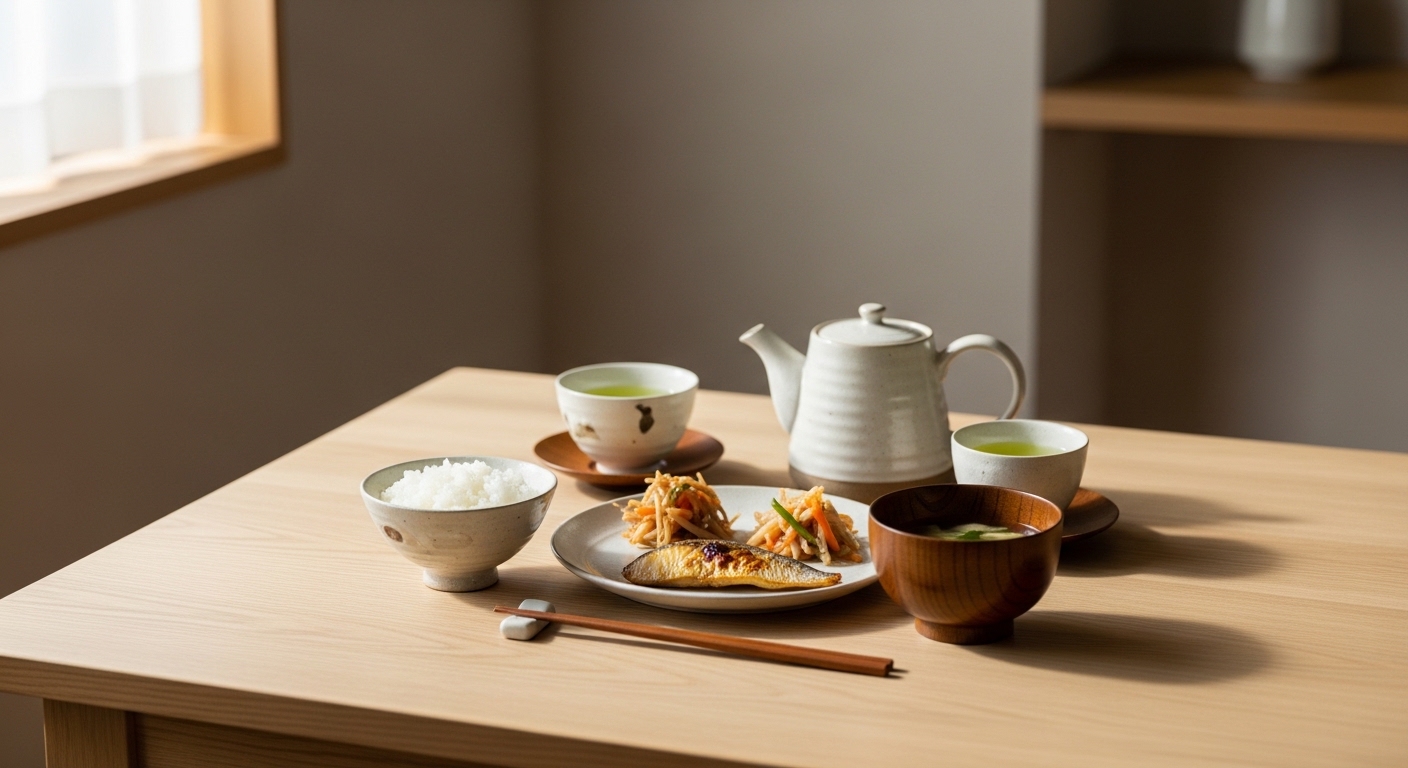
This is one reason the Japanese approach to longevity can feel so different. At its best, it is often less about perfection than about rhythm: regular meals, modest portions, daily movement, seasonal awareness, and a way of living that supports steadiness rather than constant intensity.
These habits may not look dramatic. But they are part of what makes long-term health feel possible.
In this article
- The problem with perfection-based wellness
- What rhythm means in everyday longevity
- Japanese habits that support a longer, more grounded life
- A more human way to think about healthy aging
The Problem With Perfection-Based Wellness
Perfection-based wellness is difficult to sustain.
It often depends on ideal conditions: more time, more money, more energy, more certainty, more control. But real life is rarely so stable. Most people live with changing schedules, stress, responsibilities, and imperfect routines.
When health is framed as something that only counts when done flawlessly, many people begin to feel that they are failing. Small disruptions feel like setbacks. Ordinary life starts to look like the enemy of well-being.
But lasting health usually does not come from flawless performance.
More often, it comes from patterns that are gentle enough to continue.
Longevity is not a single perfect routine.
More often, it is the result of steady habits that remain possible even when life is busy, imperfect, or changing.
What “Rhythm” Means in Everyday Longevity
Rhythm is not rigid discipline.
It is a steadier and more human form of structure — a sense of repetition that helps daily life feel anchored. Eating at regular times. Sleeping with some consistency. Moving the body in ordinary ways. Noticing seasonal changes. Returning to familiar meals, routines, and forms of care.
Rhythm creates continuity. And continuity matters.
When the body and mind live inside supportive patterns, health does not need to be rebuilt from the beginning every day. It becomes part of the shape of life itself.
This may be one reason why traditional Japanese lifestyles are often associated with longevity. The strength is not only in specific foods or isolated habits, but in the way daily life forms a coherent whole.
Japanese Habits That Support a Longer, More Grounded Life
1. Eating in moderation
Moderation is one of the quiet foundations of long-term health.
In Japan, meals have traditionally emphasized balance, variety, and portion awareness rather than excess. This does not mean rigid restriction. It means eating in a way that allows nourishment without constant overload.
Moderation is sustainable precisely because it is not extreme.
2. Keeping daily routines simple
Simple routines are easier to repeat.
A regular breakfast. A familiar soup. Tea in the afternoon. Walking to the station. Bathing in the evening. These actions do not look impressive, but they create a stable frame around daily life.
Health often grows best inside this kind of quiet consistency.
3. Walking and moving naturally
Not all movement has to be formal exercise.
Walking, standing, cleaning, shopping on foot, taking the stairs, tending to the home — these ordinary forms of movement add up over time. They keep the body engaged without requiring constant intensity.
This is one of the most overlooked aspects of healthy longevity: movement that belongs to life, not only to workouts.
4. Honoring seasonal rhythms
Seasonality shapes health in subtle ways.
In Japan, daily life has long been influenced by the seasons — through food, clothing, routines, and the atmosphere of the home. This creates a lifestyle that adapts rather than forcing the same rhythm all year long.
That flexibility may be healthier than we sometimes realize. It encourages attentiveness, variation, and a closer relationship with the environment.
5. Staying connected through ordinary life
Longevity is not only physical.
Shared meals, family routines, neighborhood ties, and familiar social roles all contribute to a sense of continuity and meaning. These forms of connection may seem ordinary, but they are deeply protective.
A longer life is not only about adding years. It is also about sustaining a life that still feels inhabited, relational, and worth returning to each day.
5 quiet foundations of longevity
- Moderation instead of excess
- Simple routines you can actually repeat
- Daily movement built into life
- Seasonal awareness and flexibility
- Ordinary human connection
Why Sustainable Health Often Looks Unremarkable
One reason people overlook real longevity habits is that they rarely appear dramatic.
They do not always create transformation stories. They do not look like high-performance systems. They do not depend on novelty.
Instead, they often look ordinary: home-cooked meals, moderate portions, regular sleep, walking, familiar rhythms, and care repeated over time.
But that ordinariness is part of their power.
The body often responds well to what is steady, not only to what is intense.
A More Human Way to Think About Longevity
A healthier way to think about longevity may be this: not “How can I do everything perfectly?” but “What kind of rhythm helps me live well over time?”
This question is gentler, but also more realistic. It leaves room for change, for family life, for work, for aging, for imperfection.
It also reflects something deeply valuable in the Japanese approach to well-being: health as part of daily life, not as something separate from it.
That perspective may not feel dramatic. But it is often what lasts.
Final Thoughts
Longevity is easy to imagine as a distant goal. But in practice, it is shaped by the texture of everyday life.
By the meals we return to.
By the routines we keep.
By the way we move, rest, adapt, and stay connected.
In that sense, healthy longevity may be less about perfection than about rhythm.
And rhythm, unlike perfection, is something we can keep returning to.
Related reading on The Zen Longevity


コメント