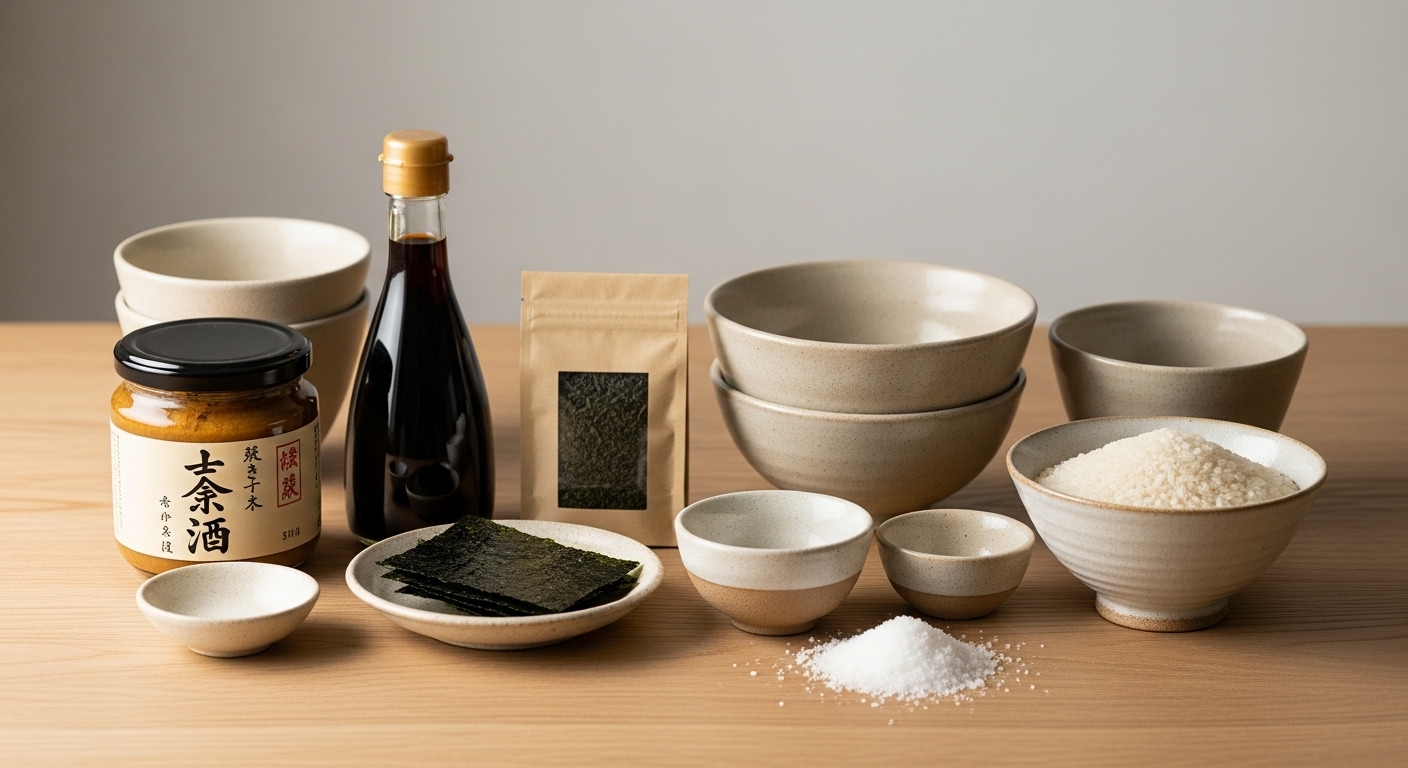
Japanese Pantry Essentials for a Calm, Healthy Kitchen
A calm, healthy kitchen often begins with a few simple ingredients. In Japanese home cooking, long-term nourishment is rarely built around one dramatic superfood. It is more often shaped by everyday staples such as miso, soy sauce, seaweed, green tea, rice, and carefully chosen seasonings. In this article, we explore the Japanese pantry essentials that support simple meals, steady habits, and a more sustainable approach to healthy aging.
Many people think of healthy eating as something complicated.
It can seem as though better health requires a long list of specialty products, strict meal plans, or constant nutritional optimization. But in many traditional food cultures, nourishment begins more quietly. It begins with what is already in the kitchen.
This is one reason the Japanese pantry is so interesting.
It is built around foods and seasonings that are practical, repeatable, and deeply integrated into daily life. Rather than relying on excess, it supports meals through balance, flavor, and structure. A bowl of rice, a simple soup, a piece of fish, a side of vegetables, a little tea — these meals are made possible not by complexity, but by a thoughtful foundation.
That foundation lives in the pantry.
And when pantry staples are chosen well, everyday cooking becomes easier, calmer, and often more nourishing over time.
In this article
- Why pantry staples matter more than quick health fixes
- The core ingredients of a Japanese-inspired healthy kitchen
- How salt, miso, seaweed, tea, and seasonings fit into daily life
- What to look for when choosing better pantry items
- How to build a calm, longevity-friendly kitchen at home
- Why Pantry Staples Matter for Healthy Aging
- The Japanese Pantry as a Foundation for Everyday Meals
- Japanese Pantry Essentials Worth Keeping at Home
- How to Think About Salt More Carefully
- Okinawan Sea Salt and Mineral-Rich Traditional Salts
- How to Choose Better Pantry Ingredients
- How to Use Pantry Staples in Everyday Life
- Why This Matters More Than Quick Fixes
- Final Thoughts
- Recommended Japanese Pantry Staples
Why Pantry Staples Matter for Healthy Aging
Healthy aging is not only shaped by what we eat occasionally. It is shaped by what we are able to prepare consistently.
This is why pantry staples matter so much. If your kitchen makes simple, balanced meals easier, then your habits become more stable. You are more likely to cook at home, rely less on ultra-processed convenience food, and create meals that feel steady rather than chaotic.
In Japanese food culture, long-term nourishment is often built through repetition.
The same ingredients appear again and again in different forms: miso in soup, soy sauce in small amounts, seaweed in side dishes, rice at the center of meals, tea throughout the day, and seasonings that support clarity rather than heaviness.
This does not make the Japanese pantry magical.
But it does make it practical. And practicality is one of the most underrated parts of a longevity-friendly kitchen.
A simple longevity principle
A healthy kitchen is not built on perfection. It is built on ingredients that make balanced, home-cooked meals easier to repeat over time.
The Japanese Pantry as a Foundation for Everyday Meals
Japanese home cooking often depends on a small number of reliable ingredients.
These ingredients may seem simple, but together they make an extraordinary range of meals possible. A pantry with rice, miso, soy sauce, seaweed, tea, and a few supporting staples can produce breakfasts, soups, side dishes, broths, and light dinners that feel satisfying without being overly rich.
This kind of pantry also changes the emotional tone of cooking.
Instead of asking, “What complicated healthy recipe should I make?” it allows a calmer question: “What simple meal can I prepare with what I already have?”
That shift matters.
It makes healthy eating more realistic. And realism is often what makes good habits sustainable.
Japanese Pantry Essentials Worth Keeping at Home
1. Miso
Miso is one of the most important pantry staples in Japanese cooking.
It adds depth, warmth, and nourishment to simple meals, especially soups. Because it is fermented, it also carries a connection to the broader Japanese tradition of supporting health through everyday food rather than through isolated “wellness products.”
A spoonful of good miso can turn hot water, tofu, seaweed, and vegetables into a meal that feels grounding and complete.
That kind of ease is one reason miso belongs at the center of a calm kitchen.
2. Traditionally Brewed Soy Sauce
Soy sauce is often used in small amounts, but it plays a large role in flavor.
Traditionally brewed soy sauce brings complexity and balance to meals without requiring excessive seasoning. In a well-stocked kitchen, it supports vegetables, broths, tofu, fish, rice dishes, and simple dressings.
As with many pantry items, quality matters.
A more naturally brewed soy sauce tends to fit better with the slower, more thoughtful style of cooking that supports sustainable habits.
3. Rice
Rice is not just a staple carbohydrate in Japanese food culture. It is also a stabilizing presence.
It gives structure to meals, pairs naturally with vegetables and soups, and helps simple side dishes feel complete. In many households, rice is part of the daily rhythm that turns separate ingredients into a coherent meal.
This is one reason rice matters in the pantry.
It helps make home cooking feel possible on ordinary days, not only on ideal ones.
4. Seaweed
Seaweed is one of the quiet strengths of Japanese cooking.
Nori, wakame, kombu, and other sea vegetables can add flavor, texture, and mineral richness to meals while taking up very little space in the kitchen. Seaweed can support soups, rice dishes, salads, side dishes, and broths in ways that feel both light and substantial.
It is also a reminder that pantry health does not have to look dramatic.
Sometimes one of the most useful ingredients is also one of the simplest.
5. Green Tea
Green tea belongs in the Japanese pantry not only as a beverage, but as part of daily rhythm.
It supports moments of pause, accompanies meals, and encourages a style of nourishment that feels less sugary and less rushed. Tea is one of the clearest examples of how Japanese daily life often links health with repetition, calmness, and attention rather than with intensity.
Even one good tea can help make the kitchen feel more grounded.
6. Good Salt
Salt has long held an important place in Japanese culture.
Traditionally, it has been associated not only with seasoning, but also with ideas of purification, clarity, and respect. That older cultural meaning still influences how many people in Japan think about salt today: not simply as something to fear, but as something to use carefully and with awareness.
At the same time, modern nutrition reminds us that all salt should still be approached thoughtfully.
Natural sea salt may contain trace minerals such as magnesium, potassium, and calcium, and many people appreciate its taste and texture. However, sea salt remains a source of sodium. It is not a miracle food, and it should not be treated as a shortcut to health.
The better perspective is not “salt is bad” or “salt is good.” It is to ask how salt fits into the larger pattern of the diet.
In a kitchen centered on minimally processed foods, soups, rice, vegetables, and simple home cooking, a good natural salt can support flavor with more nuance. Used with moderation, it can be part of a more traditional and mindful approach to eating.
7. Koji-Based Seasonings
Koji is one of the invisible foundations of Japanese food culture.
It helps create foods like miso and soy sauce, and it also appears in seasonings that support flavor, digestion, and ease in cooking. Koji-based foods reflect a slower relationship with food — one based on transformation, patience, and daily practicality.
That makes them especially compatible with a longevity-oriented kitchen.
Core Japanese pantry staples
- Miso
- Traditionally brewed soy sauce
- Rice
- Seaweed
- Green tea
- Good-quality salt
- Koji-based seasonings
How to Think About Salt More Carefully
Salt deserves a more balanced conversation than it often receives.
In everyday life, people sometimes treat all salt as if it were identical. In practice, there are meaningful differences in processing, flavor, texture, and trace mineral content. Refined table salt is primarily sodium chloride and is designed for uniformity and shelf stability. Natural sea salts are often less processed and may retain small amounts of minerals from seawater.
But this distinction should not be exaggerated.
Natural sea salt is still a sodium source, and it should still be used with moderation. The real question is not whether one salt becomes “healthy” in a magical sense. It is whether your overall pattern of eating is built around minimally processed foods, thoughtful seasoning, and awareness of total sodium intake.
When people feel chronically tired, depleted, or nutritionally off balance, the explanation is usually broader than salt alone.
Poor sleep, stress, ultra-processed foods, and overall dietary quality matter much more than any single ingredient. A better approach is to think in terms of food quality, context, and moderation.
In that context, a better-quality salt may have a place — not as a cure, but as part of a more intentional kitchen.
Okinawan Sea Salt and Mineral-Rich Traditional Salts
When people in Japan talk about mineral-rich sea salt, Okinawa is often part of the conversation.
Products such as Nuchimasu and Yukisio are well known for their distinctive taste, texture, and mineral profile. Compared with many commonly used salts, they are often noted for containing higher levels of naturally occurring minerals such as magnesium, potassium, and calcium.
This does not make them miracle products.
They still contribute to overall sodium intake. Their real value is better understood in terms of culinary character, mineral complexity, and how they fit into a broader style of eating built around traditional, minimally processed foods.
For many people, the attraction of these salts is not that they transform health on their own, but that they support simpler cooking with a little more depth and care.
What makes a good salt worth considering
The value of a natural sea salt lies less in miracle claims and more in taste, texture, traditional production, and how it supports simple, minimally processed meals.
How to Choose Better Pantry Ingredients
The quality of pantry staples often shapes the quality of everyday eating.
In general, it helps to look for products that feel closer to traditional production methods. This may include shorter ingredient lists, less unnecessary sweetness, naturally brewed seasonings, and foods that still retain some of the character created by slower preparation.
You do not need to become rigid about this.
The goal is not to build an idealized kitchen overnight. It is to improve the foundations gradually, choosing ingredients that make calmer and more nourishing meals easier to prepare.
A few useful questions can help:
- Does this ingredient support simple home cooking?
- Is it minimally processed compared with common alternatives?
- Does it help me rely less on heavily packaged foods?
- Can I use it regularly in ordinary meals?
If the answer is yes, it probably belongs in a longevity-friendly pantry.
How to Use Pantry Staples in Everyday Life
The best pantry staples are the ones you actually use.
You might begin with a very simple structure: rice, soup, one protein, one vegetable side, and tea. With miso, soy sauce, seaweed, and a good salt in the kitchen, that kind of meal becomes much easier to assemble.
For example:
- Miso soup with tofu and wakame
- Rice with grilled fish and lightly salted vegetables
- Tea with a simple breakfast
- A quick soup or broth made richer with seaweed and miso
These meals do not need to feel performative.
What matters most is not aesthetic perfection, but the fact that the kitchen helps you return to simple, balanced food again and again.
Why This Matters More Than Quick Fixes
Modern wellness often encourages people to think in terms of hacks.
But most long-term health is built less by hacks than by ordinary systems that quietly work. A better pantry is one of those systems. It reduces friction. It supports home cooking. It makes moderation easier. It helps whole foods feel more satisfying.
This is one reason the Japanese pantry offers such a helpful model.
It does not depend on constant novelty. It depends on a small group of ingredients that continue to support the body through ordinary life.
That kind of support is often what sustainable well-being looks like.
Final Thoughts
A calm, healthy kitchen does not need dozens of products.
Often, it begins with a few thoughtful staples: miso, rice, tea, seaweed, soy sauce, a good salt, and seasonings that make simple food feel complete. These ingredients are not exciting because they are trendy. They matter because they make balanced meals more possible.
That is one of the quiet strengths of Japanese food culture.
It supports long-term well-being not through excess, but through foundations.
If there is one useful takeaway, it is this:
Choose pantry ingredients with more care.
Build meals around simple foods.
Think in terms of daily rhythm rather than quick fixes.
In that setting, the pantry itself becomes part of a more grounded and sustainable approach to healthy aging.
Related reading on The Zen Longevity
Recommended Japanese Pantry Staples
If you would like to bring a little more of this calm, Japanese-inspired approach into your own kitchen, it helps to begin with just a few reliable staples.
You do not need to buy everything at once. A gentler place to start is to choose one or two ingredients that you can use often in simple meals. Over time, these small additions can make home cooking feel easier, more nourishing, and more grounded.
A simple place to begin
- Start with one fermented staple such as miso
- Start with one fermented staple such as miso
- Add one everyday seasoning such as naturally brewed soy sauce
- Keep one calming drink such as green tea in the kitchen
- Choose simple pantry items you will actually use regularly
If you would like to bring a little more of this calm, Japanese-inspired approach into your own kitchen, it helps to begin with just a few reliable staples.
You do not need to buy everything at once. A gentler place to start is to choose one or two ingredients that you can use often in simple meals. Over time, these small additions can make home cooking feel easier, more nourishing, and more grounded.
A simple place to begin
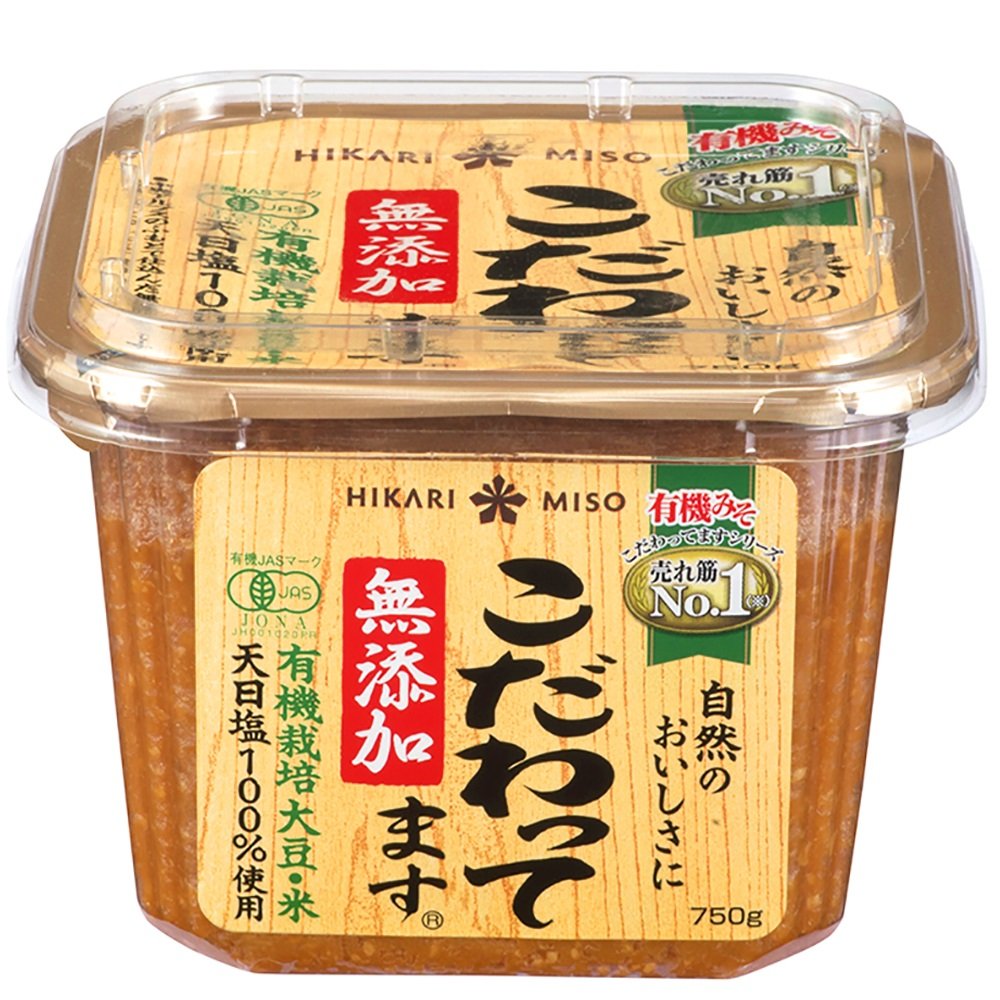
1. Traditionally Brewed Miso
A good miso is one of the easiest ways to make simple meals feel warmer and more complete. It works well in soups, broths, sauces, and light everyday cooking.
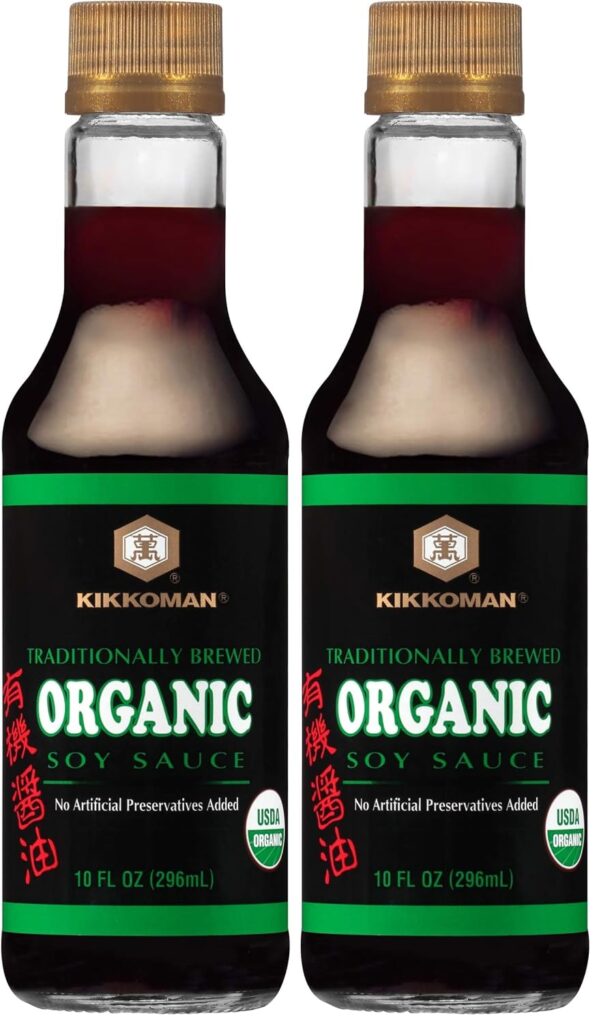
2. Naturally Brewed Soy Sauce
A naturally brewed soy sauce can bring more depth and balance to vegetables, tofu, fish, rice dishes, and simple dressings without relying on overly processed flavorings.
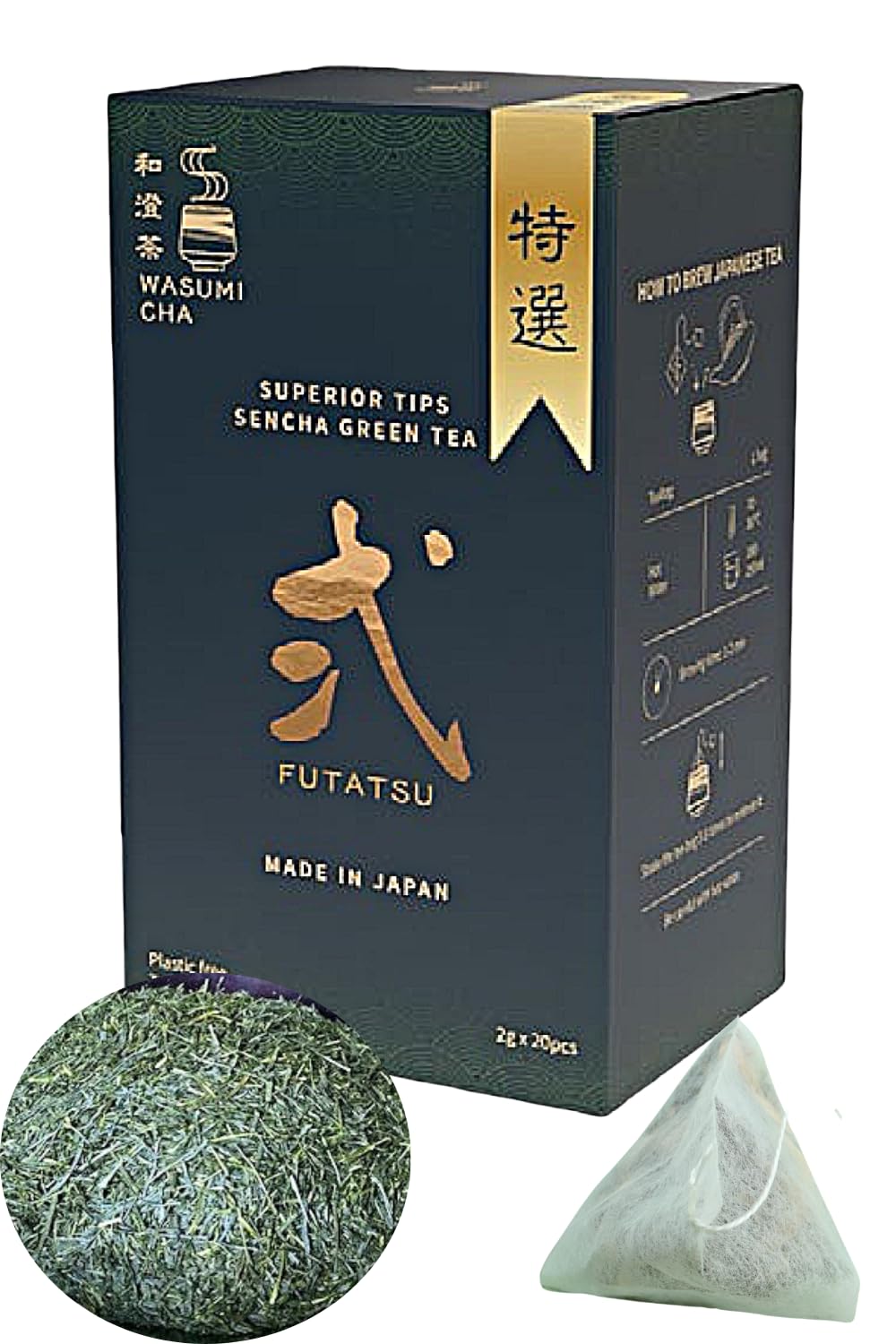
3. Japanese Green Tea
Green tea is one of the simplest pantry staples for creating a calmer daily rhythm. It pairs naturally with meals and can gently replace sweeter drinks in everyday life.
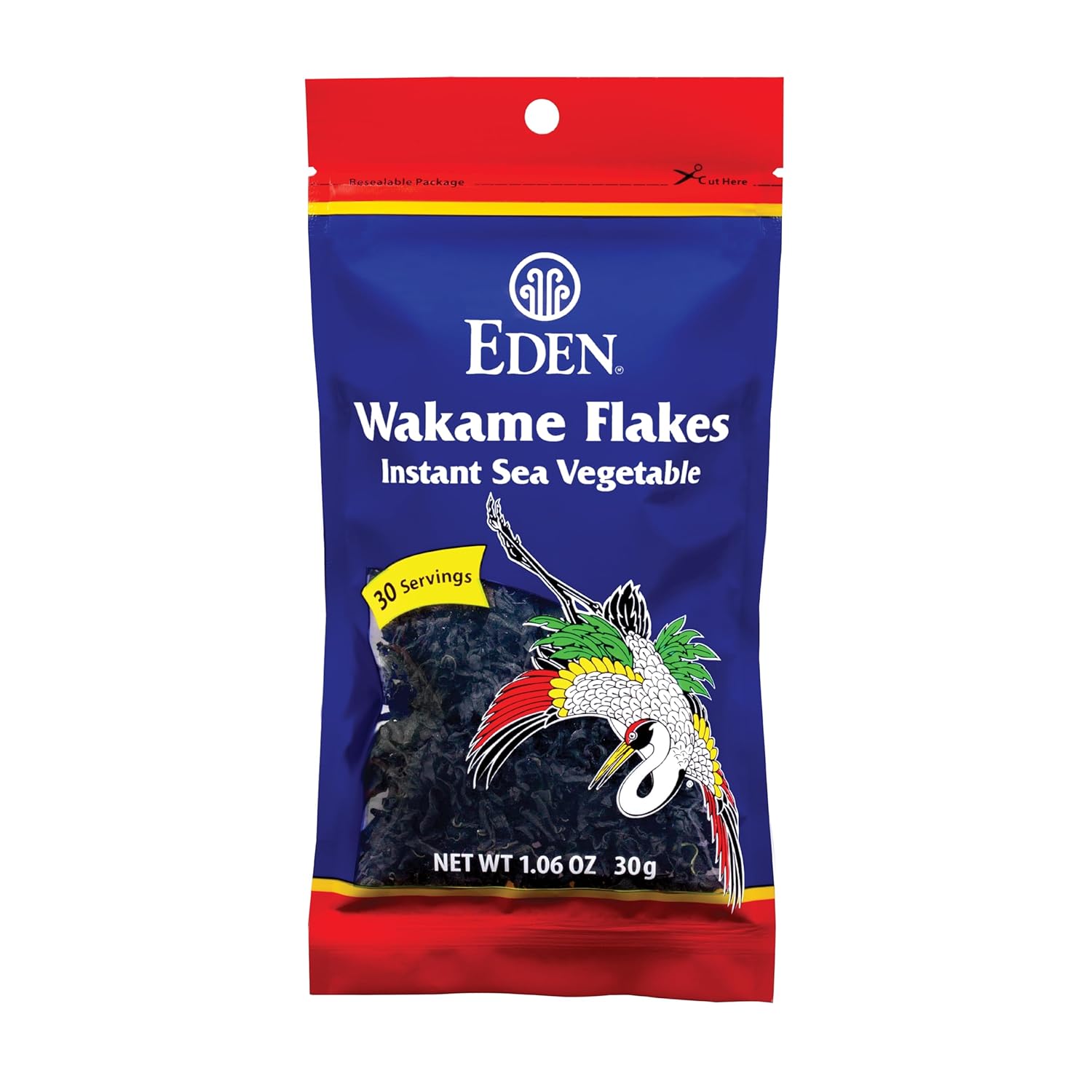
4. Dried Seaweed
Seaweed is easy to store and adds depth, texture, and variety to soups, rice bowls, salads, and small side dishes. It is one of the quiet strengths of the Japanese pantry.
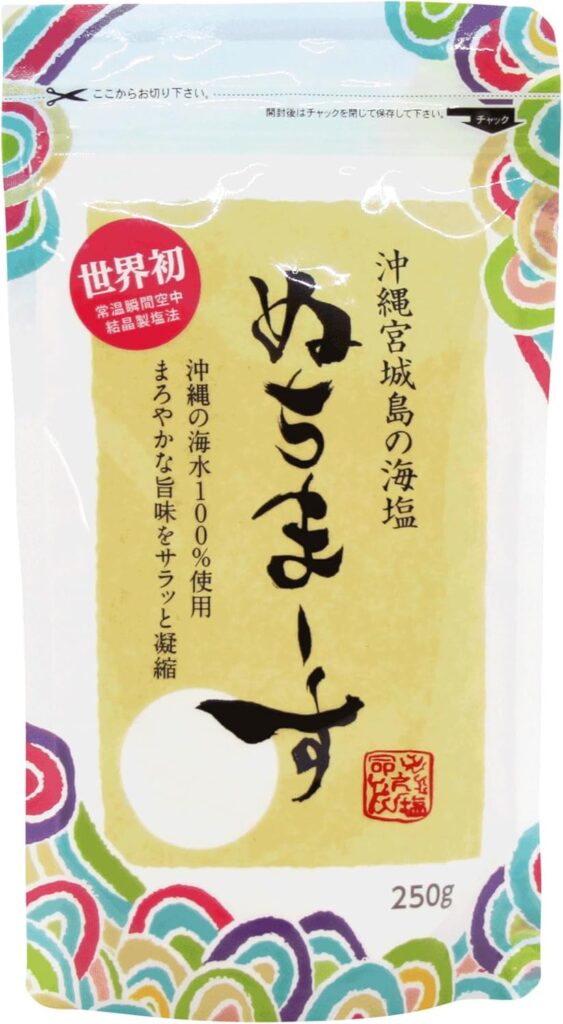
5. Natural Sea Salt
A good natural sea salt can support simpler cooking with more flavor and intention. The goal is not excess, but more thoughtful seasoning in home-cooked meals.
A note on recommendations
We recommend pantry staples that support simple, balanced home cooking. The goal is not to buy more for the sake of it, but to choose a few ingredients that make everyday meals easier and more nourishing.
コメント