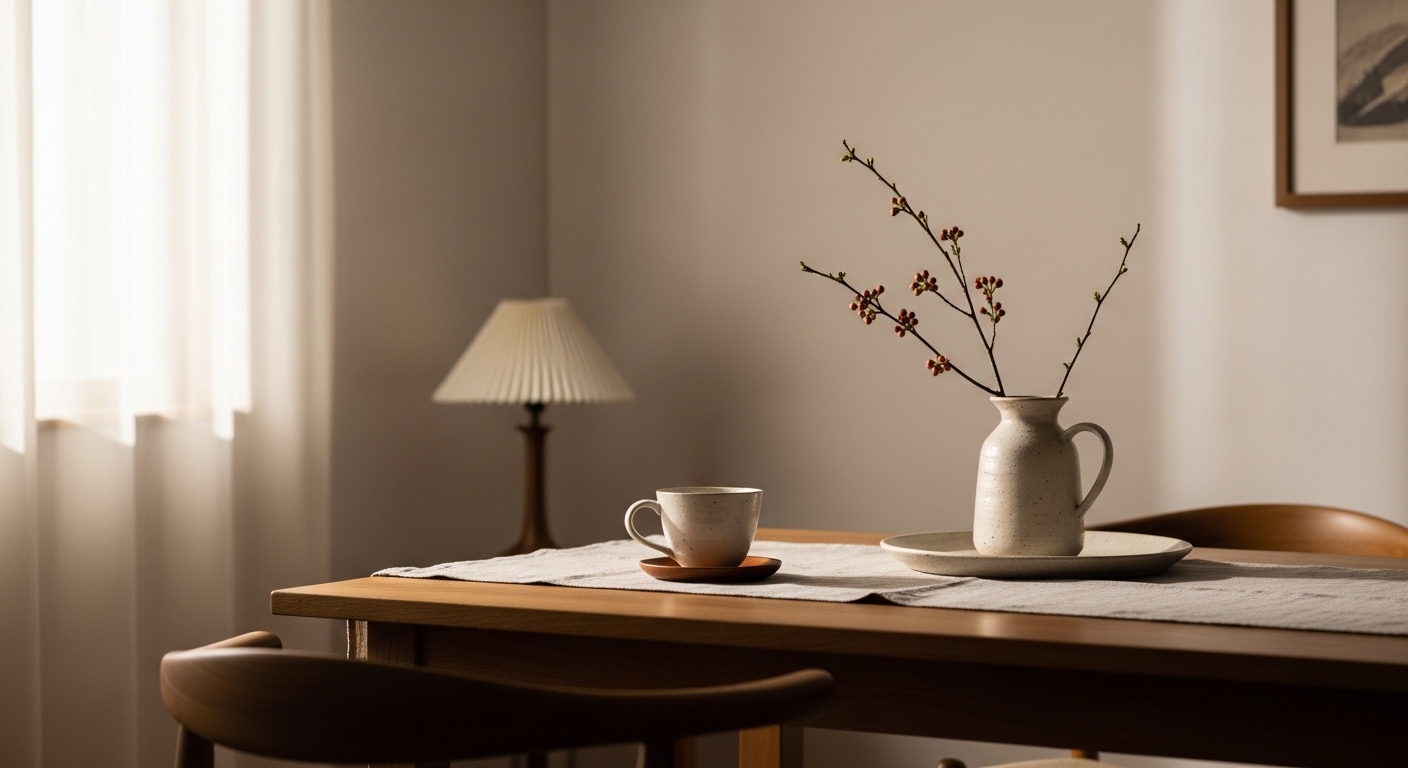
The Japanese Art of Slowing Down: Small Daily Rituals for a More Mindful Life
Mindful living does not have to begin with a perfect routine. Sometimes it begins with something much smaller: a quiet cup of tea, an unhurried meal, or a moment of calm at the start of the day. In this article, we explore how simple Japanese daily rituals can bring more presence, balance, and gentleness into modern life.
In modern life, speed is often treated as a virtue.
We move quickly, eat quickly, respond quickly, and fill even our quiet moments with stimulation. Over time, this pace can begin to feel normal. But it often leaves us disconnected from our bodies, our homes, our meals, and even the people around us.
Mindful living offers another way.
Not a dramatic escape from daily life, but a quieter way of returning to it.
In Japan, many everyday habits reflect this gentle rhythm. They are not always called “mindfulness,” and they are not usually presented as wellness trends. Instead, they are woven into ordinary life: how tea is prepared, how a room is cared for, how a meal is eaten, how the day begins and ends.
These small rituals may seem simple. But together, they create something powerful: a life with more presence, more calm, and more awareness.
In this article
- What mindful living really means
- Why slowing down matters
- 5 small Japanese rituals that invite calm
- How to begin your own mindful living practice
What Mindful Living Really Means
Mindful living does not mean living perfectly.
It does not require a silent morning routine, an immaculate home, or a complete break from stress. In its simplest form, mindful living means bringing more attention to the life you are already living.
It is the practice of noticing.
Noticing your breath before speaking.
Noticing the taste of your food.
Noticing the light in the room.
Noticing when your body is tired and asking for rest.
This kind of awareness can sound small, but it changes the texture of daily life. When we move through the day with even a little more presence, ordinary actions begin to feel less mechanical and more meaningful.
Mindful living is not about doing more. Often, it begins by doing a little less — but doing it with greater care.
Mindful living, in simple terms:
It is not about creating a perfect lifestyle. It is about bringing more awareness, care, and presence into the life you already have.
Why Slowing Down Matters in Everyday Life
Slowing down is not laziness. It is a form of attention.
When we slow down, even briefly, we create space between action and reaction. That space helps us feel more grounded. Meals become more nourishing. Conversations become more sincere. Rest becomes deeper. Small routines become restorative rather than empty.
Many people imagine that a calm life requires fewer responsibilities or more free time. But in reality, mindful living often begins in the middle of ordinary, busy life. It begins not by changing everything, but by changing the quality of our attention.
A few slower moments can reshape an entire day.
This is one reason small rituals matter so much. They give form to presence. They help the body and mind return to a steadier rhythm.
Small Japanese Rituals That Invite More Calm
Japanese daily life contains many quiet gestures that support mindfulness without announcing themselves as such. They are practical, grounded, and often deeply domestic. Their power lies not in performance, but in repetition.
1. Beginning the morning without rushing
The tone of the day is often set in its first few minutes.
A more mindful morning does not have to be elaborate. It may be as simple as opening a window, sitting with tea, stepping outside for a moment of fresh air, or preparing breakfast without looking at a screen.
In many homes, mornings are not only about efficiency. They are also about orientation — gently arriving in the day.
This kind of beginning reminds us that we are not machines starting a task list. We are human beings entering a new day with body, mood, and intention.
2. Making tea as a pause, not a task
Tea can be one of the simplest mindful rituals.
The act itself is ordinary: heating water, choosing a cup, pouring slowly, waiting a moment before drinking. But this is exactly why it matters. It transforms something functional into something felt.
In Japanese culture, tea is often associated with quiet attention. Not because it must be ceremonial, but because it invites a natural pause. Even one unhurried cup can create a small boundary in the day — a moment in which nothing else has to happen yet.
For many people, this is a gentle way into mindfulness: not meditation in the abstract, but presence through the hands and senses.
3. Eating with attention, not distraction
Mindful eating is not about strict rules. It begins with awareness.
To sit down for a meal, to notice color and aroma, to chew without rushing, to eat without constant input from a phone or television — these are simple acts, but they restore a sense of connection.
Traditional Japanese meals often encourage this naturally. The use of small dishes, seasonal ingredients, balanced portions, and visual care can slow the pace of eating. Food becomes something to experience, not just consume.
This matters not only for enjoyment, but for the feeling of being nourished in a fuller sense. A meal can be both physical and emotional grounding.
4. Caring for the home in small, quiet ways
Mindful living is closely connected to the spaces we inhabit.
In Japan, there is long-standing value placed on order, cleanliness, and respect for the home — not as perfectionism, but as a way of maintaining harmony. Wiping a table, arranging shoes at the entrance, folding cloth neatly, or opening space in a room can all become small acts of reset.
These gestures may seem minor, but they shape the emotional tone of daily life. A cared-for space often supports a calmer mind.
The goal is not an ideal home. It is a livable sense of clarity.
5. Ending the day with a moment of gratitude
Evening rituals matter as much as morning ones.
At the end of the day, a quiet pause can help the mind soften its grip. This might mean reflecting on one good moment, expressing thanks before a meal, dimming the lights earlier, or simply sitting in silence for a minute before sleep.
Gratitude, in this context, does not need to be dramatic. It can be very modest. A warm bowl of soup. A shared conversation. A clean bed. A little less tension than yesterday.
These small acknowledgments help close the day with awareness rather than exhaustion alone.
5 gentle rituals to try
- Open a window before checking your phone
- Make tea slowly and drink it without distraction
- Sit down properly for one meal a day
- Tidy one small corner of your home
- End the day by noticing one thing you are grateful for
A Gentle, Family-Rooted Way of Well-Being
One of the most meaningful things about mindful living in a Japanese context is that it often grows from ordinary family life.
It is found in shared meals, seasonal habits, respect for routine, care for elders, and the quiet repetition of things done every day. This kind of well-being is not always individualistic. It is relational. It is shaped by the home, by memory, and by the rhythms we inherit from the people around us.
This is part of what makes it feel sustainable.
Rather than chasing constant self-optimization, this approach asks a gentler question:
How can daily life itself become more supportive, more beautiful, and more calm?
That question may be quieter than modern wellness culture, but it is often more enduring.
A family-rooted view of wellness
In this perspective, well-being is not only personal. It is shaped by meals, routines, home life, and the quiet habits we share with others.
How to Start Your Own Mindful Living Practice
You do not need to transform your life overnight.
A more realistic beginning is to choose one small ritual and return to it consistently. You might drink your morning tea without your phone. You might sit down properly for one meal a day. You might spend two quiet minutes opening the windows each morning. You might tidy one corner of your home before bed.
The ritual itself matters less than the attention you bring to it.
Start small.
Keep it gentle.
Let it belong to real life.
Mindful living becomes meaningful not when it looks impressive, but when it becomes natural.
Final Thoughts
Longevity is not only shaped by what we eat or how we exercise. It is also shaped by how we move through ordinary life.
By how we begin the morning.
By how we prepare tea.
By how we eat, care for our homes, and end the day.
These small acts may not appear dramatic from the outside. But they create the inner conditions for a steadier, more grounded life.
In that sense, slowing down is not falling behind.
It may be one of the most meaningful ways to return to what matters.
Related reading on The Zen Longevity


コメント